Radon Mitigation Services in Central New York and Southern Tier
Radon Mitigation Built to Keep Safer Air Flowing
Radon is an invisible, odorless radioactive gas that naturally forms from small amounts of uranium in the soil beneath homes and buildings. It can enter through foundations, basements, and other openings, often collecting indoors without homeowners realizing it. As the leading cause of lung cancer after smoking, elevated radon levels should never be ignored. At Professional Home Inspection Service, we use specialized electronic testing equipment to detect radon in homes, commercial buildings, and schools before designing the right mitigation solution.
Higher radon exposure is common across Binghamton, New York, largely because of local geology, and readings can vary sharply from one property to the next. Our New York certified inspectors test for elevated levels and install mitigation systems that safely draw radon out of the structure before it can threaten your indoor air. We serve homeowners and property owners throughout Binghamton, Ithaca, Cooperstown, Cortland, Elmira, Corning, Watkins Glen, Dryden, Oneonta, Delhi, Roscoe, Callicoon, and Syracuse, New York.
With 25 years of hands-on inspection and testing experience, our team understands how radon behaves beneath different foundations and building styles. Every system is designed around your specific property, using proven engineering, clear reporting, honest guidance, and careful installation. If testing has confirmed elevated radon levels, the next step is reducing them quickly and properly. Reach out through our contact page to request your radon mitigation quote today.
How We Remove Radon From Your Home
Sub-Slab Depressurization Systems
Beneath your concrete floor, soil gas builds steady pressure that pushes radon upward into living areas. We install a sealed suction point and routed piping that intercepts that gas at its source, redirecting it outdoors before it reaches the rooms where you breathe.
Active Soil Depressurization
Passive venting alone rarely solves a serious radon problem. By adding a running fan to the vent path, we create negative pressure under the slab, pulling gas from the foundation around the clock and discharging it above the roofline where it disperses safely.
Crawl Space Encapsulation
Dirt-floor crawl spaces let radon migrate into the structure above. We seal these areas with heavy vapor barriers and tie them into the suction system, cutting off the entry pathway while reducing moisture, musty odors, and the damp conditions that invite further problems.
Sump Pit Sealing and Coverage
Open sump pits act as wide highways for radon entering through the foundation. We fit airtight, gasketed covers that maintain proper drainage while closing the gap, then connect the pit to the depressurization network so water management and gas control finally work together.
Post Installation Radon Verification
Installing a system is only half the work. After commissioning, we conduct a follow-up measurement to confirm the design is actually pulling levels down to a safe range. You receive documented proof that the mitigation performs, not just a promise that it should.
Fan and Vent Pipe Installation
The fan and piping form the engine of any mitigation system. We size each fan to your home, route schedule rated pipe through the cleanest path, and seal every joint, ensuring quiet operation and airflow strong enough to keep readings low for years.
Our Trusted Radon Mitigation Process
Property Assessment And System Planning
We begin by assessing the property location and construction style to design the right radon mitigation system. This helps determine fan size, pipe layout, and pressure field extension, ensuring negative pressure is created beneath the basement floor for effective radon removal.
Creating The Radon Extraction Point
Our team creates a proper extraction point by drilling through the floor and removing about five gallons of soil. A 21-inch vinyl disc is triple sealed in place, keeping the system secure and positioned away from the building’s footer.
Running Pipe To The Fan
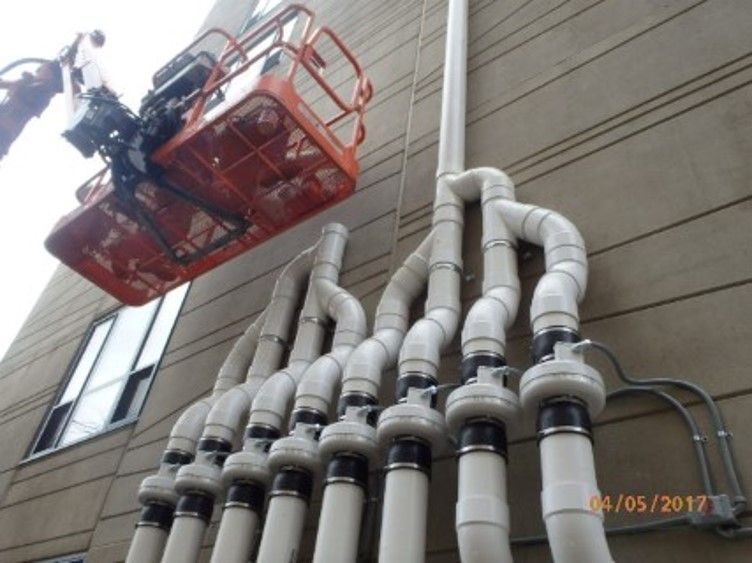
The radon pipe is connected from the extraction point to the fan, allowing gas to be safely pulled from below the structure. A condensate trap is installed above the fan to protect it from moisture, freezing, and motor damage.
Securing The Exterior System
We install an exterior bracket to hold the pipe and fan firmly in place, extending the system above the roofline. Electrical outlet boxes are also added to power the indoor alarm and the outside fan switch safely.
Installing The System Monitor
A manometer is installed inside the property as a visual gauge to confirm that the fan is operating properly. The electric alarm provides an added safety feature, warning homeowners or building owners if the radon mitigation system stops working.
Final Testing And Radon Reduction
After installation, we test the system to confirm proper radon reduction. As a New York State certified ELAP lab, we conduct testing ourselves and post-test every system to ensure radon levels are reduced below 4 pCi/L or lower if desired.
Lower Radon Levels With Protection That Keeps Working
Your home should be the safest place you spend your time, not a source of silent, invisible risk. Since 1989, Professional Home Inspection Service in Binghamton, New York has installed thousands of radon mitigation systems that continuously draw harmful gas from beneath the home and vent it safely outdoors. Our NYS-listed, certified radon mitigation team delivers low operating costs, minimal maintenance, and installations usually completed in one day with little disruption. You also get a guaranteed system, 100% for 3 years, backed by a 5-year fan warranty. We schedule promptly, communicate honestly, and include important safety steps like retesting and back-draft testing. Visit our contact page or submit our quote form to protect your indoor air.
IN TOTAL, OUR PROCESS TAKES AROUND 3-4 HOURS.
Conversation with Morgan and Kevin on their radon mitigation system
Our two-man team ensures an efficient and timely installation is always the standard, taking care to utilize runners, and clean and vacuum the space before leaving.
FAQs - Frequently Asked Questions
How much does radon mitigation cost?
Pricing depends on your foundation type, the number of suction points required, and the overall complexity of routing the system. After fully evaluating your home, we provide a clear written quote upfront, so you understand the full investment before any work actually begins.
How long does a mitigation system take to install?
Most standard residential installations are completed within a single working day. Larger homes or multiple foundation areas can extend that timeline, but we always confirm the expected schedule in advance so you can plan around the work without unwelcome surprises or open-ended delays.
What radon level requires mitigation?
The Environmental Protection Agency recommends taking action when readings reach or exceed four picocuries per liter. Many homeowners choose to mitigate at lower levels too, since no amount of radon is considered entirely risk free for long-term breathing inside a typical family home.
Will the system make my house noisy?
A correctly sized and properly installed system runs quietly in the background day and night. The fan is typically mounted outside living areas, and sealed piping keeps operation discreet, so most homeowners quickly forget the system is working to protect their indoor air.
Does Professional Home Inspection Service test radon before installing?
Yes, always. Serving Binghamton, New York and the surrounding region, we confirm elevated levels through accurate testing first, then design mitigation around your actual readings rather than assumptions, ensuring the system you receive matches the specific conditions present inside your own particular home.
How do I know the system is still working?
Most systems include a visual pressure gauge that clearly shows active suction at a glance. We explain exactly how to read it during the final walkthrough, and a simple periodic check confirms everything continues functioning exactly as intended reliably throughout the years ahead.
Can radon levels rise again after mitigation?
With a well-maintained active system, radon levels stay consistently low over time. Significant structural changes or fan failure can affect performance, which is precisely why occasional retesting is wise, giving you ongoing assurance that your protection remains effective long after the original installation.
Do you provide documentation for real estate transactions?
Absolutely, always. Drawing on 25 years serving Binghamton, New York, we supply clear post-installation verification reports that fully satisfy buyers, agents, and lenders, giving everyone involved in your sale or purchase confidence that radon has been properly and permanently addressed.